

Pai is a town where a flexible plan works best. It’s small enough that you don’t lose time on logistics, yet surrounded by enough nature that you can choose a different, simple trip every day. Below is a suggested 3–4 day plan, along with practical tips that genuinely make your stay easier.
Day 1: arrival in Pai, scooter rental, and hot springs
On the first day, right after arrival, it’s worth renting a scooter. In theory, Bolt and Grab operate in Pai, but in practice they’re very unreliable—often there are no drivers available, and waiting times can be long. A scooter gives you independence and saves a lot of nerves, especially for trips outside the town itself.
The best approach is to:
- rent a scooter immediately after arrival (prices range from 100–300 baht per day)
- plan to use it for getting around throughout your stay in Pai
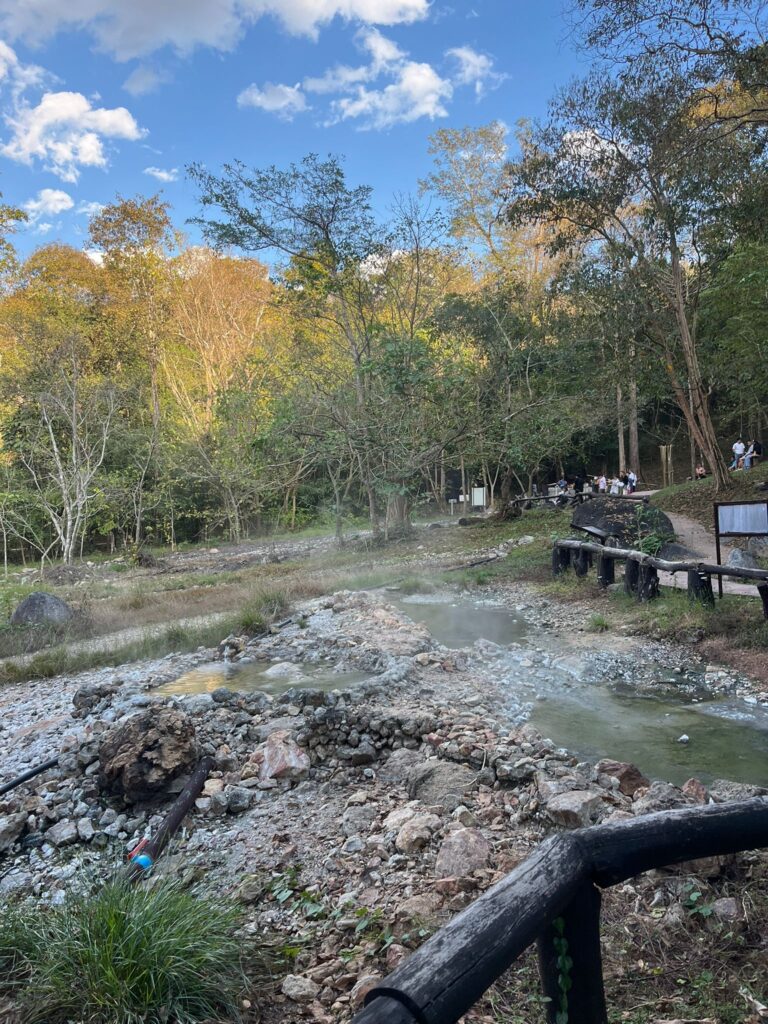
Once transport is sorted, a great idea for the rest of the day is Tha Pai Hot Spring. It’s an ideal option after the long, winding road from Chiang Mai—easygoing and very restorative. Warm water and surrounding nature help you ease into Pai’s rhythm. Entry costs 300 baht.
Day 2: trekking to a waterfall
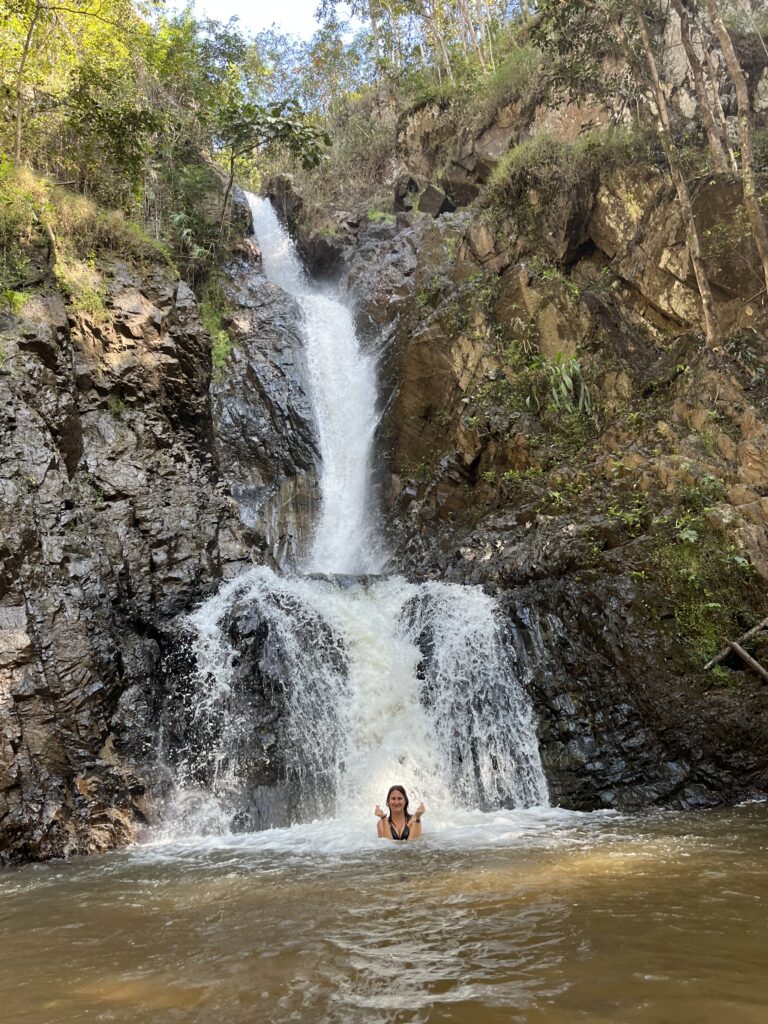
The second day is best dedicated to a longer hike to Mae Yen Waterfall. The route is about 12.5 km long and runs through jungle.
There’s one important thing to be aware of:
the trail crosses a stream very frequently. In practice, this means entering the water many times, sometimes every few hundred meters.
Because of this, the best footwear is:
- trekking sandals
- or shoes you truly don’t mind getting wet
With standard trekking boots, this route can simply be uncomfortable. Trekking sandals are the most practical solution here—lighter, easier, and stress-free when it comes to wet feet.
The waterfall itself is a great spot for a longer break: resting, swimming, and then a calm return along the same route. It’s worth planning this day without rushing.
The whole hike takes around 5–6 hours.
Link to the route on mapy.com: https://mapy.com/s/jenazonupo
Day 3: Bamboo Walk, lunch with a view, waterfall, and sunset
The third day can be planned a bit more lightly, but still with some hiking.
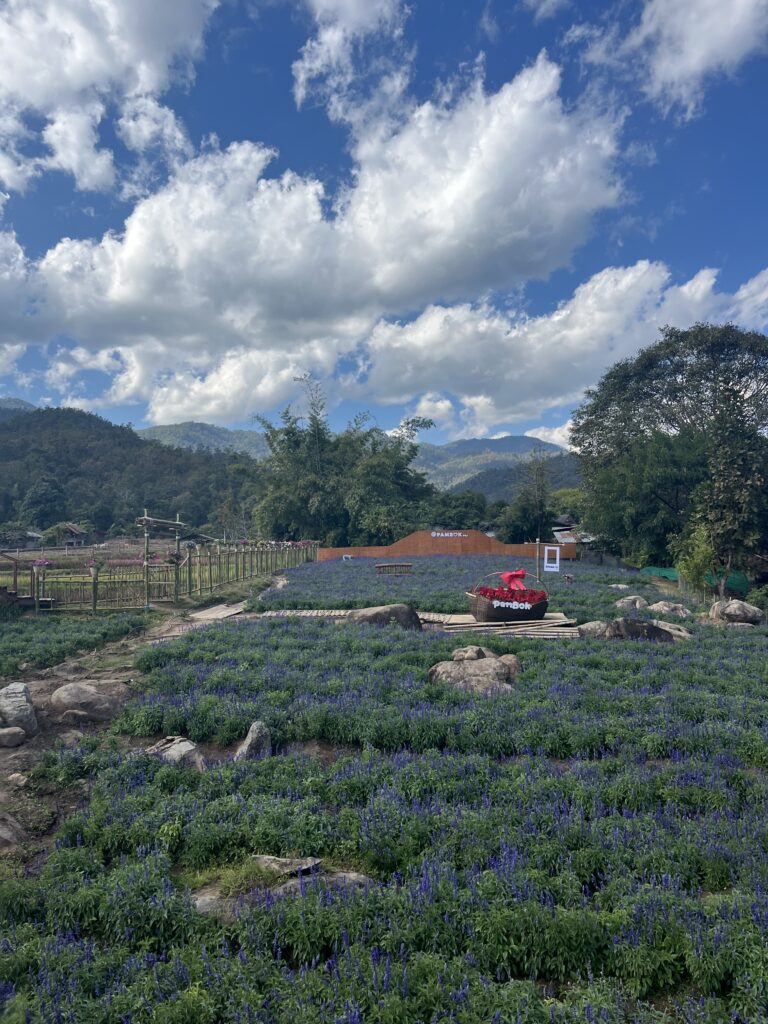
A good choice is a trek to Kho Ku So Bamboo Bridge—a trail leading through the forest to a popular attraction. The entrance is on the left side of the road and is fairly easy to find.
A big plus of this route is that:
- there are restaurants at the top
- you can easily plan lunch there with a view
You can return via the main road; traffic is light, so it’s not a problem. Along the way, it’s worth stopping at a waterfall. It’s a nice break and a pleasant addition to the day, without adding extra kilometers.
The whole outing takes about 3–5 hours.
Link to the route on mapy.com: https://mapy.com/s/fubogezotu
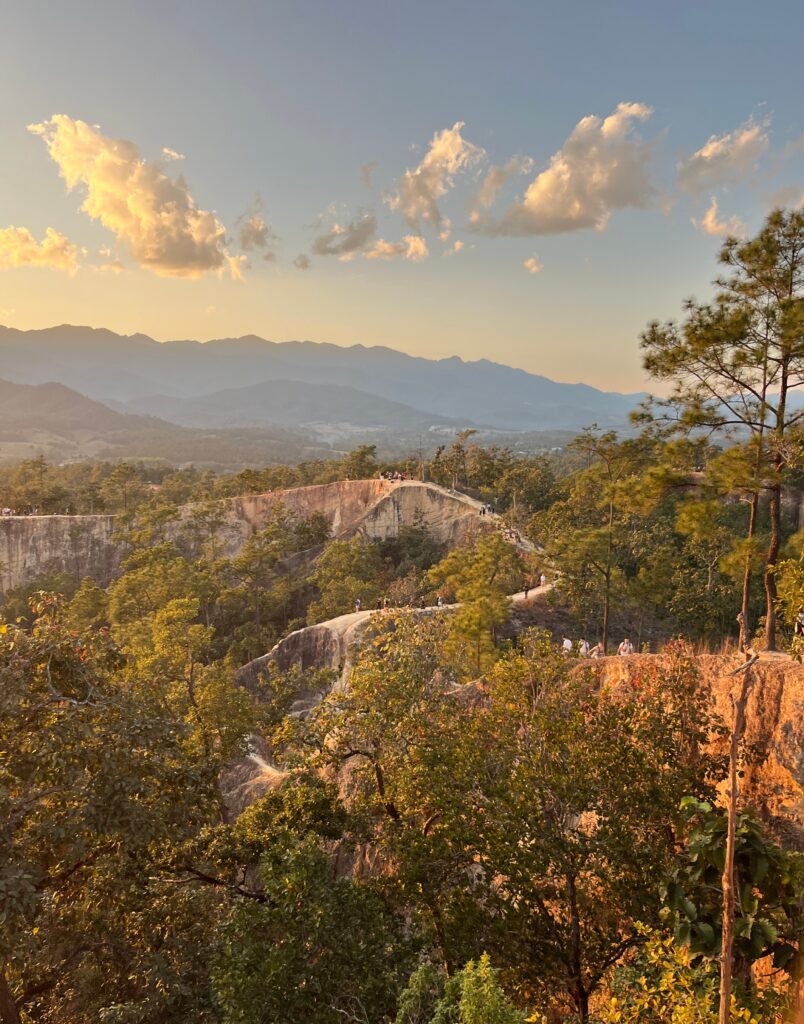
In the evening, Pai Canyon is a great idea for sunset. It’s one of the most popular spots in the area, and for good reason—the views are truly worth the short scooter ride. It’s best to arrive a bit earlier and stay until the sun has completely set.
Day 4 (optional): tubing and a more social vibe
If you plan to stay in Pai longer or feel like doing something completely different from trekking, tubing is worth considering.
Tubing is floating down the river on a large inflatable ring. Along the way, there are bars where participants stop for a drink and conversation. The whole experience has a very backpacker, party-like character and is a good option for people who want to:
- meet other travelers
- spend the day in a more social way
- do something that isn’t physically demanding
Evenings in Pai – music, jam sessions, and a hippie atmosphere
In the evenings, the main street turns into a Night Market. Street food stalls and stands with souvenirs and clothes create an unforgettable nighttime Pai atmosphere. The selection of handicrafts and clothing is more interesting and different than in Bangkok or Chiang Mai.
There are also plenty of bars and cafés with live music, often played very informally, without a stage or distance between musicians and people sitting at the tables. The atmosphere is relaxed and non-formal—no one comes here “for a concert,” just to sit, listen, and be together.
One of the more interesting experiences is jam sessions in a teahouse, where music emerges spontaneously. Anyone can join in—if someone doesn’t play an instrument, they can easily grab a tambourine, shaker, or another simple instrument. It’s more about being together and keeping rhythm than about skills. It’s one of those places where it’s very easy to feel Pai’s hippie vibe, with its openness toward others.
Some places also host regular events. For example, Circus Hostel organizes fire shows twice a week—on Thursdays and Sundays. Even if you’re not staying at the hostel, you can simply come in the evening, sit with a drink, and watch the show. It’s another element that makes evenings in Pai different from most small towns.
Thanks to all this, Pai doesn’t end after sunset. After a day spent in nature, it’s easy to find a place in the evening with music, conversation, and a laid-back atmosphere—exactly what this town is most often associated with.
Accommodation in Pai – where to stay and what to expect
Accommodation in Pai is very diverse, but most places share one thing in common: a relaxed, nature-oriented vibe. You’ll find everything from simple bamboo bungalows and social hostels to quiet guesthouses and small resorts surrounded by greenery.
When choosing where to stay, it’s worth thinking less about standard and more about location and atmosphere.
Staying close to the center (convenient, lively)
Good choice if you want to be close to the Night Market, cafés, bars, and evening music spots.
Examples:
- Pai Village Boutique Resort – comfortable, well-kept resort right by the walking street, but still relatively quiet
- Medio de Pai – popular mid-range option with a pool, central location
- Baan Pai Riverside – close to the center, but with a calmer riverside feel
Best for: short stays, no scooter in the evening, easy logistics
Downside: more noise at night, especially on weekends
Staying slightly outside town (quiet, nature, space)
Ideal if you like calm mornings, mountain or rice-field views, and don’t mind using a scooter.
Examples:
- Phu Pai Art Resort – spacious, green, with mountain views
- Pai My Guest Resort – relaxed, bungalow-style accommodation with a pool
- Pai Island Resort – quiet riverside location, good for slowing down
Best for: nature lovers, longer stays, rest after trekking
Downside: scooter needed for most outings
Social hostels (backpackers, events, meeting people)
Great if you’re traveling solo and want easy social interaction.
Examples:
- Circus Hostel – well known for fire shows, social vibe, parties
- Common Grounds Pai – friendly atmosphere, communal areas, not overly wild
- The Nest Pai – smaller, cozy hostel with a calmer social scene, a little bit outside of town
Best for: solo travelers, short stays, meeting others
Downside: noise, less privacy
Guesthouses & small resorts (quiet, comfort, privacy)
Better if you value sleep, personal space, and a peaceful base.
Examples:
- Pai River Corner – quiet riverside guesthouse close to nature
- Pai Herbs Resort – calm, green surroundings, good value
- Reverie Siam – boutique-style, elegant, very peaceful
Best for: couples, hikers, longer stays
Downside: less social interaction
Getting to Pai – the easiest options
You can get to Pai in several ways:
- by minibus from Chiang Pai – tickets available at travel agencies or online
- private driver – cost around 2,000 THB one way from Chiang Mai or around 3,000 THB from Chiang Dao
- rented scooter or car from Chiang Mai
A private driver is often very easy to arrange simply by asking a Bolt or Grab driver. Even if they can’t go themselves, they usually know someone who will. Locally, this is a completely normal practice.

