

Are you planning a trip to Thailand, or are you already here and wondering how to stay longer legally? Below you’ll find a clear and up-to-date explanation of the available visa options, how extensions work at the immigration office, and what visa runs really are.
Types of visas or entry for Thailand
1. Visa Exemption (visa-free stay)
EU, US, GB and citizens of another 90 countries can enter Thailand visa-free.
- Stay: up to 60 days
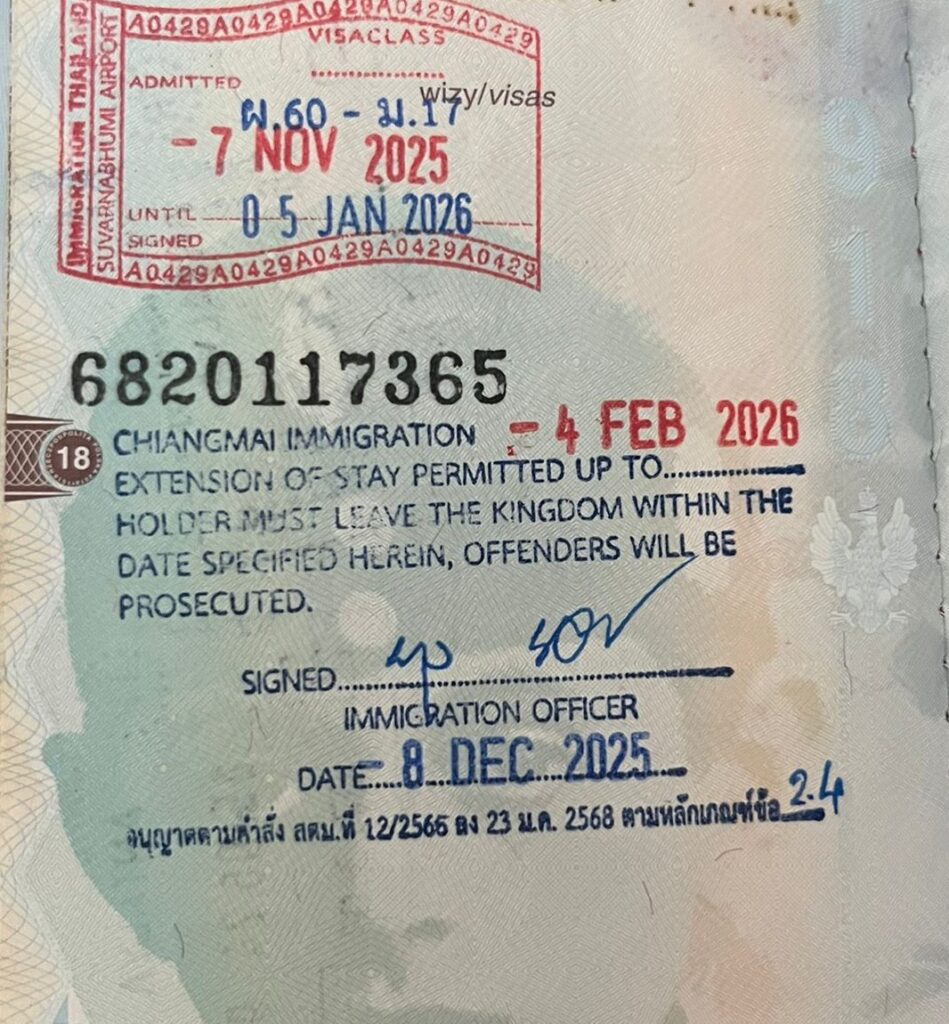
- Can be extended by 30 days at an immigration office
- Up to 90 days total without a visa
This is the most common option for tourists and people who are “testing out” Thailand.
2. DTV Visa (Digital Nomad / Remote Work)
A new option for people working remotely.
- Long-term visa (up to 5 years, multiple entries)
- Each stay: up to 180 days
- If you want to stay longer than 90 days, a check-up at the immigration office is required
- Requires meeting financial criteria and providing documents – not for everyone, but excellent for digital nomads
3. Education Visa (ED)
- Thai language course, school, or university
- Stay: several to more than a dozen months
- Requires genuine study and reporting
⚠️ Note: Controls are becoming more frequent – this is no longer an “easy loophole” as it once was.
4. Non-Immigrant Visa (B, O, Retirement, etc.)
- Work, family, retirement
- Requires meeting specific criteria
- Best suited for people with a long-term plan
Extending your stay at the Immigration Office
If you are already in Thailand and want to stay longer, you can apply for a visa or stay extension. This can usually be done once per stay.
What do you need?
- Passport
- Copies of two passport pages:
- the main page with your photo
- the page with your visa or entry stamp
- TM7 form – available at the immigration office; you can fill it in while waiting
- Passport photo (4 × 6 cm)
- Cash fee: 1,900 THB
- TM30 confirmation from your place of accommodation – request it from the landlord or building management
Time: from about 30 minutes to several hours (depending on the city)
Immigration offices are located in, among others: Bangkok, Chiang Mai, Phuket, Krabi, and Samui.
Visa run – what is it really?
A visa run means leaving Thailand (often just for one day) and re-entering in order to:
- receive a new entry stamp
- “reset” a visa-free or visa stay
What does a visa run look like?
- Land borders (most commonly Laos or Malaysia)
- Often organized by agencies using minivans
- Departure early in the morning, return the same evening or the next day
⚠️ Important warning
- Thailand does not guarantee re-entry
- Frequent visa runs may result in refusal
- Immigration officers review your stay history carefully
A visa run is an emergency solution, not a long-term strategy.
What to choose – short and practical
- Up to 3 months → visa-free stay + extension
- Remote work for longer (e.g. 6 months) → DTV
- Study / longer stay → ED or Non-Immigrant visa
- Visa run → only occasionally

