

The rainy season in Thailand is a topic that sparks many emotions and misunderstandings among tourists and travelers. Does it really mean constant rain and ruined holidays? Let’s take a closer look at the facts, debunk popular myths, and see who this time of year is actually best for.
If you’d like a broader overview of the entire year, take a look at this article, where I break down travel conditions in each season to help you choose the best time for your trip 👉 https://poznajtajlandie.pl/en/best-time-to-visit-thailand-weather-prices-and-crowds/
What is the rainy season in Thailand and when does it occur?
The rainy season in Thailand, also known as the monsoon season, is a period dominated by rainfall caused by the southwest monsoon. It usually lasts from May to October, although the exact timing can vary slightly depending on the region.
It’s important to emphasize that the rainy season in Thailand does not mean nonstop rain all day long. Rainfall often comes in the form of intense but short-lived downpours, after which the sun quickly reappears. As a result, the landscape becomes lush and green, and the air feels fresher.
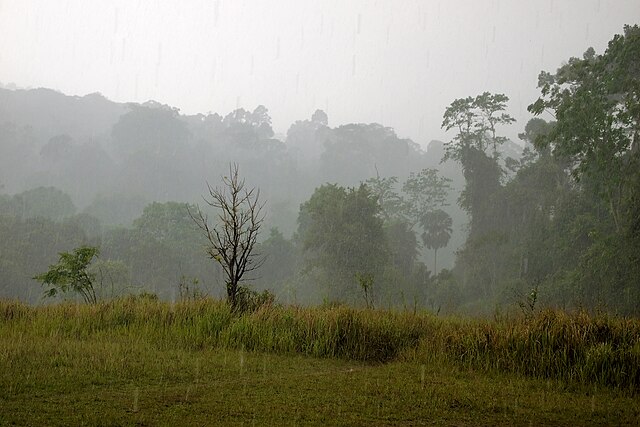
Source: Wikimedia Commons, author: Vyacheslav Argenberg, license: CC BY 4.0.
What are the most common myths about the rainy season in Thailand?
Does it rain all day long during the rainy season in Thailand?
This is one of the biggest myths. In reality, rain most often appears as short but heavy showers lasting from several minutes to a few hours, usually in the afternoon or evening. Both before and after the rain, the weather is often sunny and warm.
Does the rainy season mean you can’t enjoy tourist attractions?
No, that’s not true. Although some activities may be affected by rainfall, many remain fully accessible. Visiting temples, museums, or relaxing in a spa does not depend on the weather. Since monsoon rains are usually short but intense, sightseeing, city walks, and even beach time are possible between showers. Many nature-based attractions—such as short hikes, waterfalls, or viewpoints—take only a few hours. Checking the forecast and planning them during a dry window is usually enough to aviod downpours.
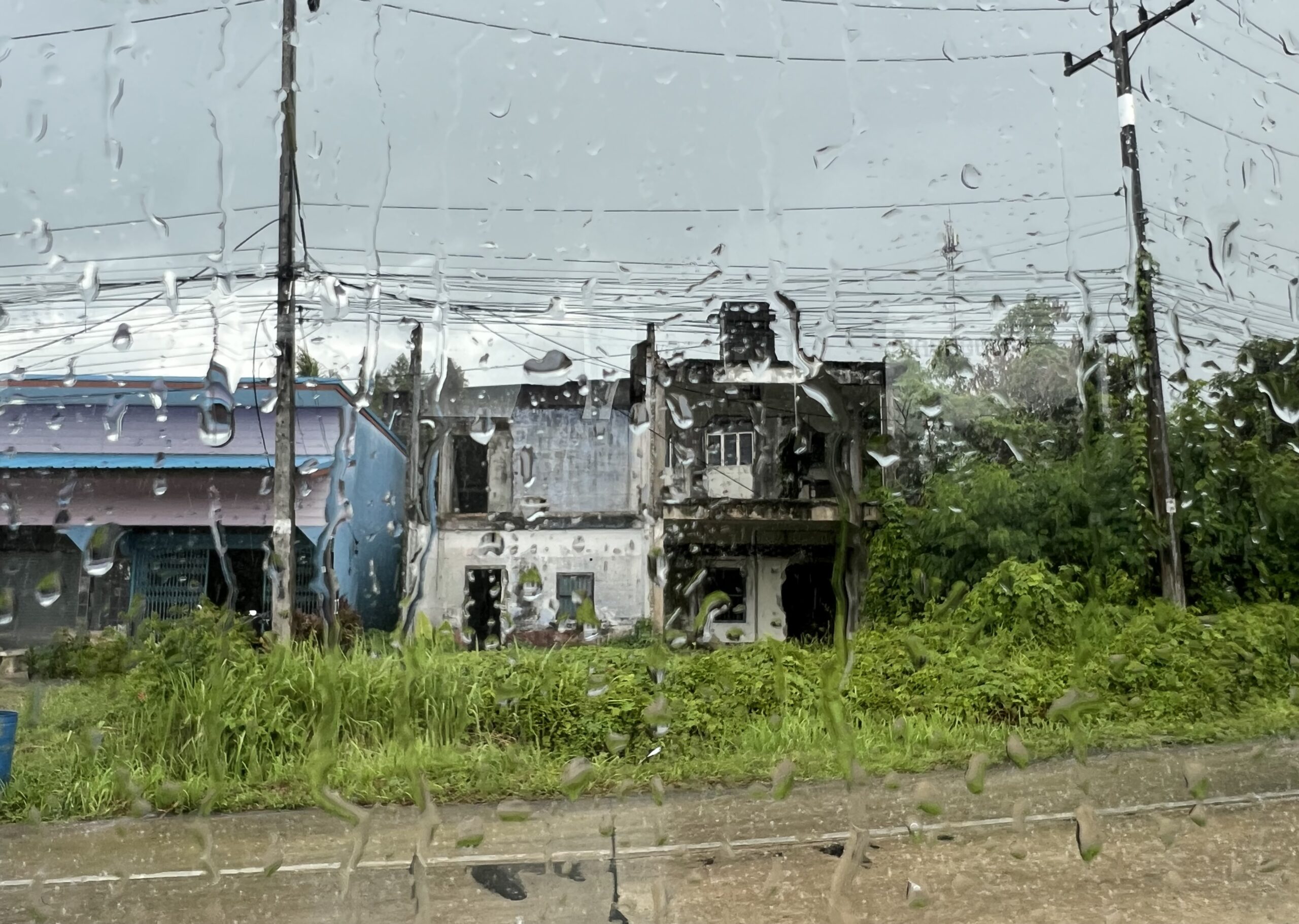
Source: Wikimedia Commons, author: Sharon Hahn Darlin, license: CC BY 2.0.
What is everyday weather like during the rainy season in Thailand?
A typical day in the monsoon season is a mix of sunshine, clouds, and rain. The day may start with clear blue skies, followed by a sudden, intense downpour, and then sunshine again—often creating rainbows. High humidity and temperatures above 30°C (86°F) persist throughout the season.
Who is the rainy season a good choice for?
The rainy season has its advantages and can be attractive to certain types of travelers:
- Nature and photography lovers – lush landscapes, full waterfalls, and vibrant vegetation are effects of the rains that are hard to see outside this season.
- Budget travelers – accommodation and tour prices are lower, and tourist crowds are smaller.
- Those seeking peace and quiet – fewer visitors mean a calmer and more comfortable experience at popular sites.
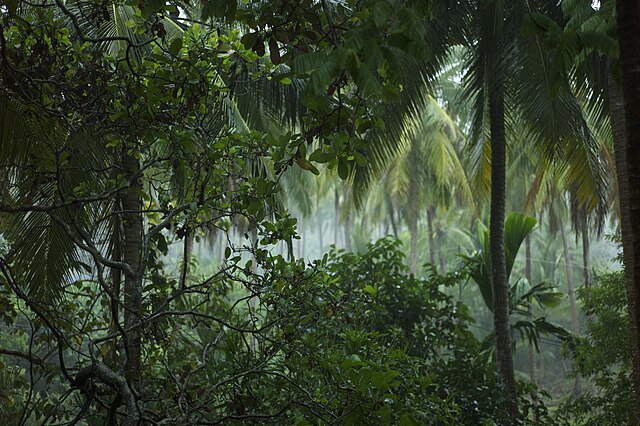
Source: Wikimedia Commons, author: Michael Cory, license: CC BY 2.0.
KWho should avoid traveling to Thailand during the rainy season?
The rainy season is not ideal for everyone. It may be challenging for:
- People who dislike changing weather conditions – sudden downpours can disrupt outdoor plans.
- Beach and swimming enthusiasts – in some regions, the sea becomes rough, limiting swimming opportunities.
- Travelers with small children or elderly companions – variable weather and high humidity can affect comfort and health.
Why is it worth understanding the true nature of the rainy season in Thailand?
Understanding what the rainy season in Thailand is really like helps avoid disappointment. It is easier to plan a trip that meets expectations. Knowing that rainfall is usually brief rather than constant allows for better time management and activity planning. Awareness of the benefits of this season also opens the door to less crowded and often more beautiful experiences.
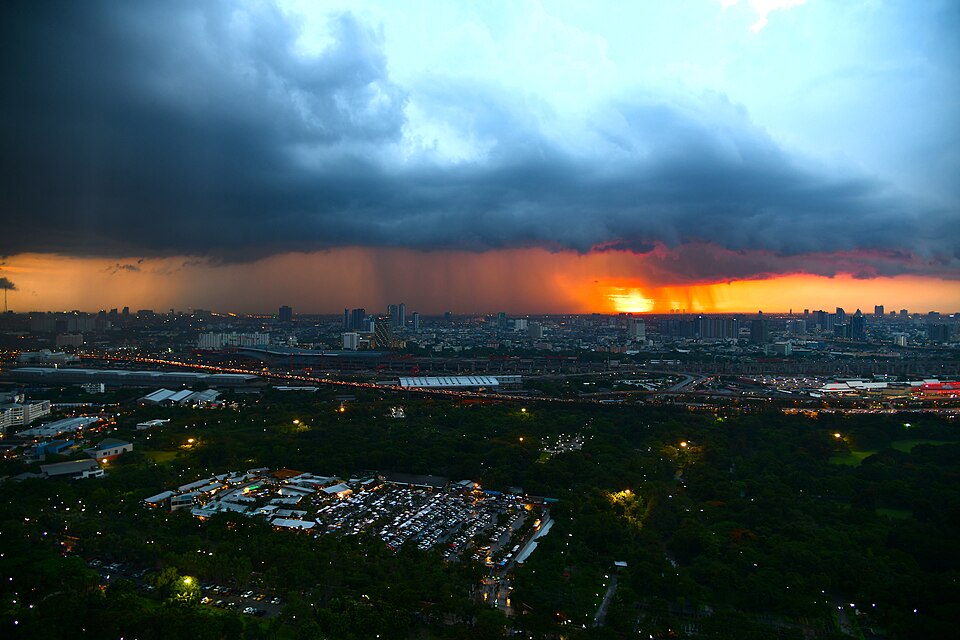
Source: Wikimedia Commons, author: Trisorn Triboon, license: CC BY-SA 4.0.
Where and when does the rainy season occur in Thailand? A regional summary
The rainy season in Thailand does not occur at the same time across the whole country. Much of the country is influenced by the southwest monsoon. This includes central and northern Thailand, such as Bangkok, Chiang Mai, and the Khao Yai National Park area. It also affects the northeast (Isan) and the Andaman Sea coast, including Phuket, Krabi, and Koh Lanta.
In these regions, the rainy season usually lasts from May to October. The heaviest rainfall typically occurs in August and September. Rain most often comes as short but intense downpours. On the Andaman Sea coast, conditions are usually more challenging. Strong winds and rough seas are more common and can limit swimming and water activities.
A different pattern appears on the eastern coast of the Gulf of Thailand. This area is influenced by the northeast monsoon. On islands such as Koh Samui, Koh Phangan, and Koh Tao, the heaviest rain falls later in the year. It usually occurs from October to December, with a peak in November.
Because of these regional differences, the weather varies across Thailand. By planning a route according to local monsoon patterns, it is possible to find areas with better weather almost all year round.
Summary
The rainy season in Thailand is a time of intense but short-lived rainfall, interspersed with sunny moments. Popular myths about constant downpours and a lack of attractions are exaggerated. It is a season full of greenery, lower prices, and quieter destinations, ideal for travelers who appreciate nature and tranquility. At the same time, those focused on beach holidays and stable weather may want to consider traveling at a different time. Understanding the real conditions of the rainy season allows for better preparation and a more enjoyable stay in Thailand.

