

Thailand is a vibrant country full of contrasts and fascinating places worth exploring. To fully enjoy your trip, it’s worth getting familiar with the available transport options in Thailand and choosing those that best suit your needs and budget.
What are the options for domestic flights in Thailand?
Long-distance transport in Thailand often takes place by air. The country has a well-developed network of airports, and low-cost airlines such as AirAsia, Nok Air, and Thai Lion Air offer connections between major cities and popular resorts.
Domestic flights are much faster than traveling by train or bus over similar distances. For example, a flight from Bangkok to Chiang Mai takes about 1 hour, while a train journey can take up to 12 hours.
It’s worth remembering that some airports, such as Don Mueang in Bangkok, mainly serve low-cost carriers, while Suvarnabhumi functions as a hub for international flights and selected domestic routes.
Why is it worth traveling by train in Thailand?
Trains in Thailand are not just a means of transportation but also a unique opportunity to observe everyday life and admire changing landscapes. The railway network connects many cities across the country. Train travel is often cheaper than flying or taking a bus. Night trains from Bangkok to Chiang Mai and to the south, including Surat Thani, are particularly popular. They are equipped with couchettes and sleeper cars, allowing you to comfortably sleep through the entire journey.
Note: Tickets, especially for night trains, are best purchased about a month in advance. Timetables and detailed information can be checked at:
👉 https://www.thailandtrains.com/thailand-train-timetables/
What is the comfort level and offer of Thai trains?
- Sleeper trains – ideal for overnight journeys, offering comfort and saving on accommodation.
- Second-class trains – with air conditioning or fans; a good option for moderately demanding travelers.
- Third-class trains – the cheapest, but often crowded and less comfortable.
For example, a trip from Bangkok to Ayutthaya takes about 1.5 hours and is very popular among tourists wanting to see the ancient ruins.
How do vans and coaches work in Thailand?
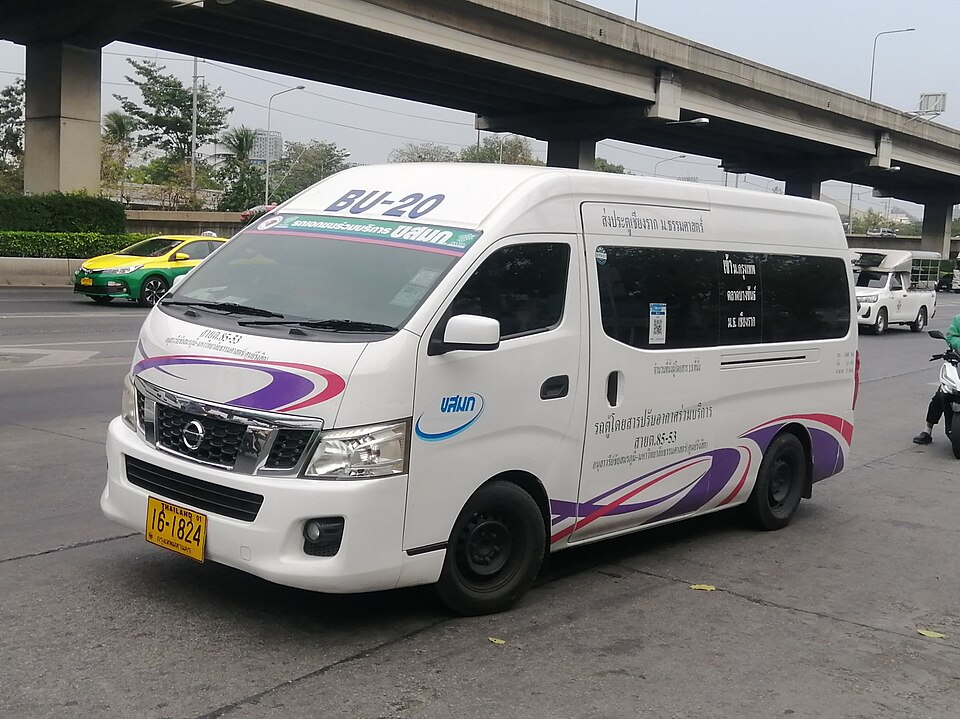
Vans and coaches are another popular way to get around, especially between cities and resorts. This form of transport in Thailand is widely available and often more flexible than trains.
- Vans – usually smaller vehicles that run more frequently and stop in smaller towns. Tickets can be purchased at travel agencies, which are practically in every touristy spot in Thailand. You can also ask at the reception of the place you are staying in.
- Coaches – larger and more comfortable, often with air conditioning and luggage space, serving long-distance routes. Tickets can easily be bought online, for example via: https://www.busonlineticket.co.th/
Is it worth renting a scooter in Thailand?
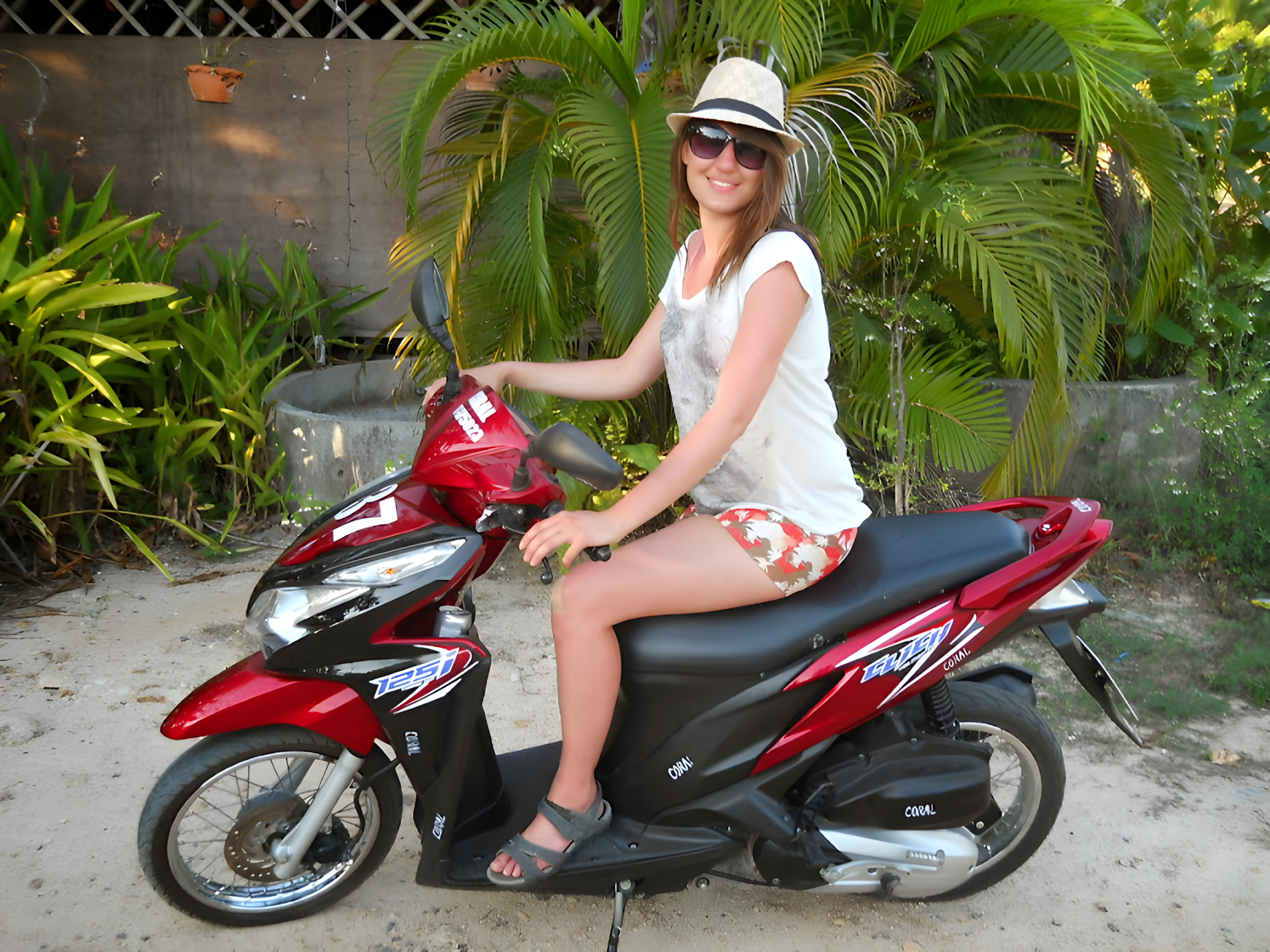
Scooters are one of the most characteristic means of transport in Thailand, especially on islands and in smaller towns. They offer great freedom of movement and help avoid parking problems.
Scooter rental is inexpensive, with prices starting at around 200–300 baht per day. However, it’s important to remember a few safety rules:
- Always wear a helmet, even if locals don’t.
- Be careful with left-hand traffic, which may feel unintuitive for visitors.
- Avoid riding after dark on less frequented roads.
Scooters work particularly well on islands, where they allow you to reach hidden beaches and local attractions.
If you’re planning a longer stay and want to ride legally, getting a driving licence is a smart option. Here’s a link to my detailed article that explains the entire process step by step.
👉 https://poznajtajlandie.pl/en/how-to-get-a-motorcycle-driving-license-in-thailand/
Grab and Bolt – transport in cities
Grab and Bolt are popular ride-hailing apps operating in Southeast Asia, including Thailand. Through them, you can order a taxi, motorcycle, songthaew, or even food delivery.
Using Grab or Bolt for transport in Thailand is convenient and safe. Especially in large cities like Bangkok or Chiang Mai. The apps offer upfront pricing, eliminating the risk of overpaying or conflicts with drivers.
For example, instead of negotiating a tuk-tuk fare, you can simply order a Grab that arrives within a few minutes. This is an ideal solution for tourists who don’t speak the local language.
In recent months, prices on Bolt have been noticeably lower than on Grab, so it’s worth using Bolt first.
Tuk-tuks and songthaews
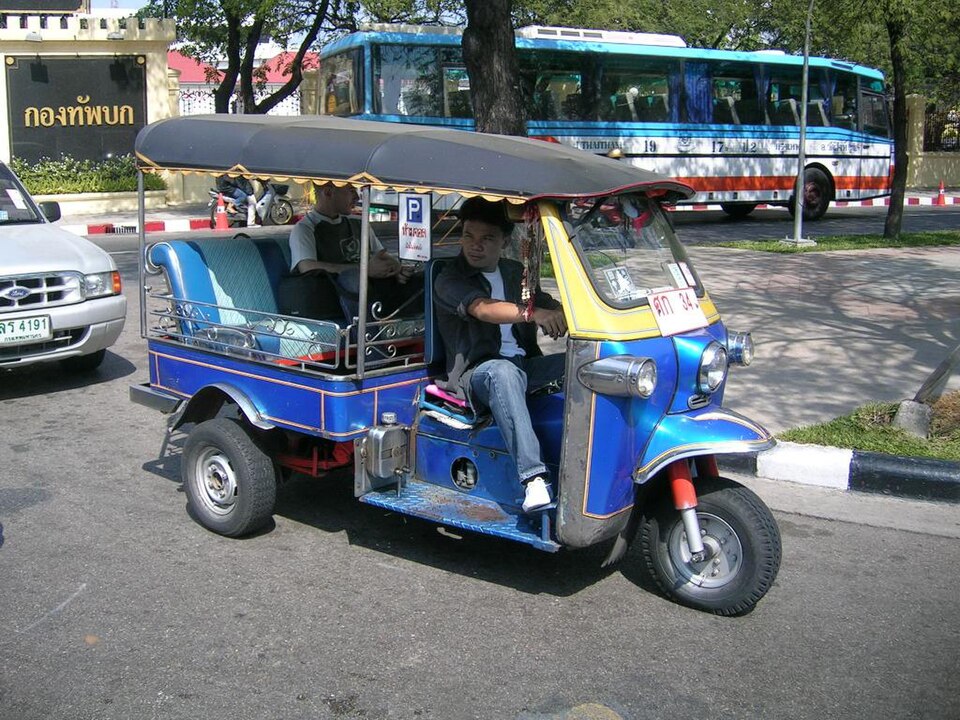
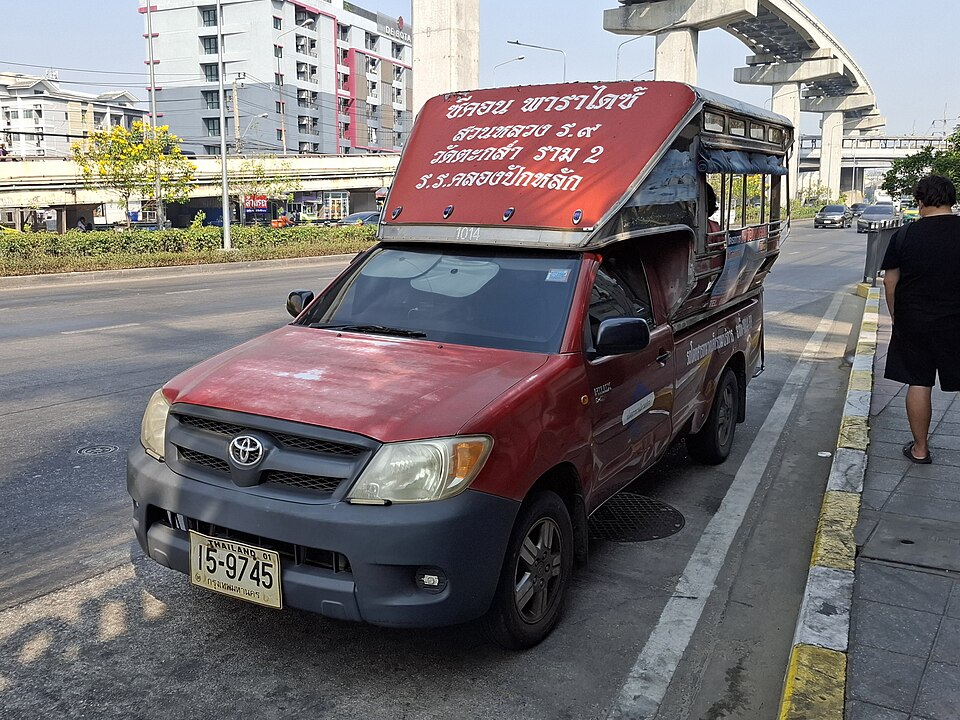
Songthaews and tuk-tuks are among the most recognizable forms of local transport in Thailand. They play an important role in everyday travel, especially in smaller towns and on the islands. Tuk-tuks are mainly used for short distances and sightseeing in city centers. Songthaews—shared pickup trucks operating on fixed or semi-fixed routes—are a cheap and practical option for getting around locally. Although prices for tuk-tuks often need to be negotiated in advance, both options offer a very local travel experience and are an easy way to reach nearby attractions without renting your own vehicle.
Public transport in the cities
Public transportation in Thailand is truly practical mainly in Bangkok, where the city has a well-developed network of urban transport. Systems such as the BTS Skytrain, MRT Metro and river boats make it possible to move efficiently around the capital and avoid heavy traffic. In other parts of Thailand, public city transport is usually limited, less frequent, or poorly signposted, so travelers often rely on taxis, songthaews, or ride-hailing apps instead. Detailed information about how public transport works in Bangkok, including routes, tickets, and planning tips, is provided in a dedicated article about Bangkok.
Summary
Transport in Thailand offers many options that can be tailored to your needs, budget, and travel plan. Domestic flights allow quick travel over long distances, while trains offer a relaxed way to explore the country. Vans and coaches are convenient and widely available, and scooters are perfect for exploring smaller towns and islands. Finally, apps like Grab make life much easier for tourists by providing fast and safe transport in cities.
When planning a trip around Thailand, it’s worth getting to know these forms of transport well to travel flexibly and comfortably while discovering every corner of this fascinating country.

